Home › Blog › Do Nootropics Really Work?
Common QuestionsDo Nootropics Really Work? An Honest, Evidence-Based Answer
| Short answer | Yes — with realistic expectations. Support is steady and subtle, not a magic switch. |
| What helps | Named botanicals at sensible amounts, taken daily for weeks. |
| What doesn’t | Expecting an instant genius pill, or quitting after a few days. |
| Best results | A good nootropic plus sleep, movement and real food — not instead of them. |
It is the question everyone asks before spending a cent: do nootropics really work, or is it all clever marketing? The internet is split between people who swear by them and people convinced they are snake oil. The truth, as usual, lives in the middle — and it depends almost entirely on what you expect a nootropic to do in the first place.
This is an honest, hype-free answer. We will separate what cognitive-support botanicals can reasonably do from what no supplement can do, explain why so many people reach opposite conclusions, and give you a simple way to judge whether one is actually working for you.
The honest answer: it depends on your expectations
If “work” means a pill that instantly turns you into a genius for a big exam, then no — nootropics do not work like that, and anything promising it is not being straight with you. But if “work” means steady, everyday support for memory, focus and mental clarity that builds with consistent use, then yes, that is a reasonable and realistic thing to expect from well-formulated botanicals. The gap between those two definitions is where almost all the disagreement comes from.
Botanicals like Bacopa Monnieri, Lion’s Mane, Ginkgo Biloba, Rhodiola Rosea and L-Theanine have long traditions of use and ongoing research interest for supporting cognition. The felt benefits tend to be subtle and cumulative — a bit less mental fog, an easier time settling into a task, steadier focus through the afternoon — rather than a dramatic, unmistakable jolt. Bacopa is the clearest case: a systematic review of randomized, controlled human trials in the Journal of Alternative and Complementary Medicine (2012) found benefits on memory measures in trials that dosed daily for around twelve weeks.
What the evidence-minded view actually says
Being honest about evidence means resisting both extremes. On one side, it is not true that “nothing works.” Several of these ingredients have generations of traditional use and a body of ongoing scientific interest behind them. On the other side, it is also not true that any of them are proven miracle enhancers — the research is a work in progress, individual responses vary, and no botanical is a medicine that treats a condition. If you want the middle position stated by people with no product to sell, the systematic review of plant-derived nootropics and human cognition in Critical Reviews in Food Science and Nutrition (2023) is a fair place to start.
The grown-up position sits in between: these are supportive botanicals that may help a healthy brain do its everyday job a little more comfortably, used consistently and alongside good habits. That is a genuinely useful thing — it is just not the same as the fantasy sold in some ads. If you want a breakdown of which ingredients pull their weight, our guide to the best nootropic ingredients for memory and focus goes job by job.

Why some people say “it did nothing”
When someone insists a nootropic did nothing, there is almost always a reason — and it is usually fixable. The four big ones:
- ✓ Instant-lift expectations — judging a slow-building memory botanical by how they feel in an hour.
- ✓ Quitting too soon — stopping after a few days when Bacopa needs weeks of daily use.
- ✓ Skipping doses — inconsistent use is the single most common reason for a flat result.
- ✓ Under-dosed formulas — “fairy-dusted” blends with token amounts hidden in a proprietary blend.
Notice how many of these are about how the product was used, not the ingredients themselves. Consistency and a transparent, sensibly dosed label solve most of them. For the full week-by-week picture, see how long nootropics take to work.
A formula built to be judged fairly
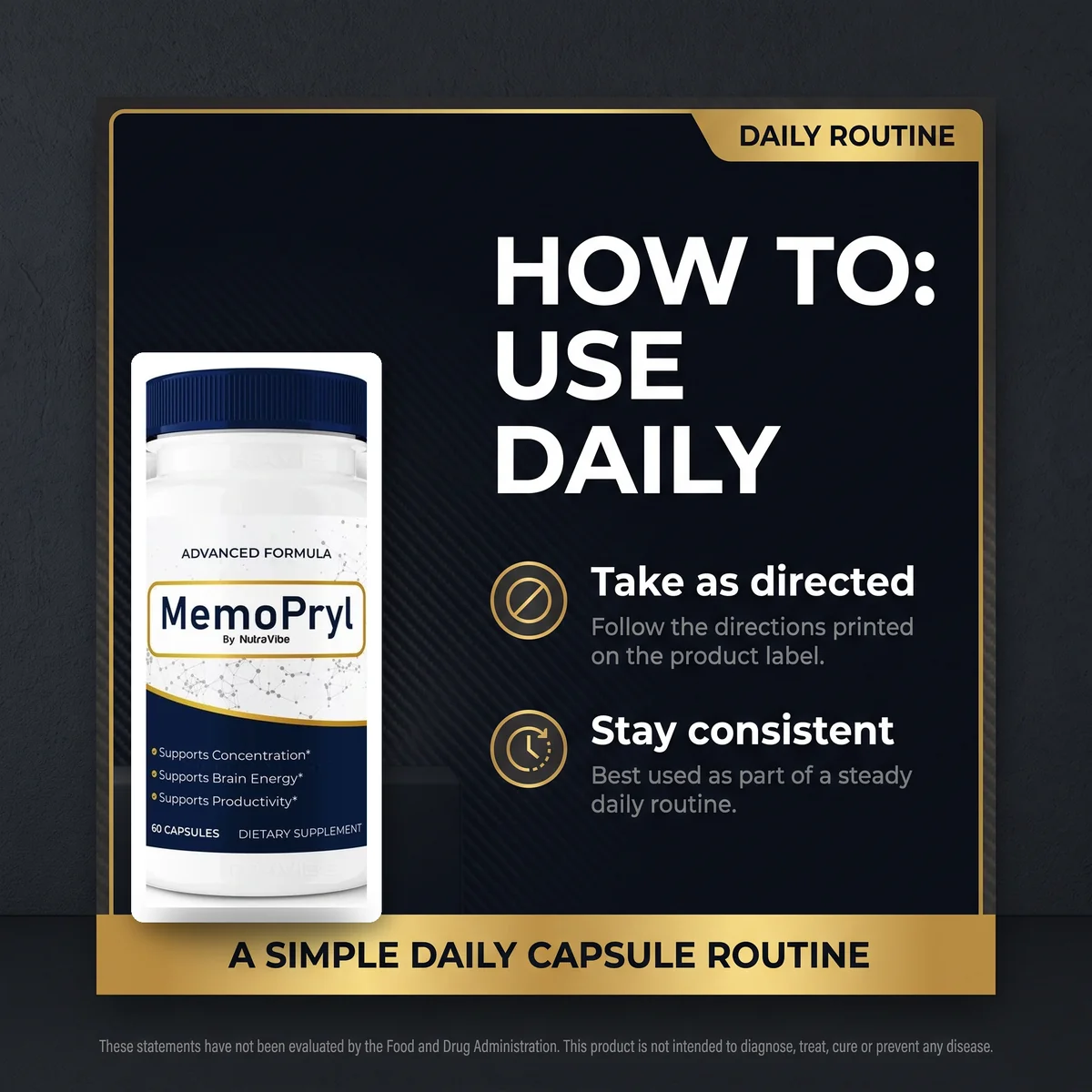
MemoPryl uses named, well-researched botanicals — Bacopa Monnieri, Lion’s Mane, Ginkgo Biloba, Rhodiola and L-Theanine — at sensible amounts on a transparent label, in one daily capsule that is easy to take consistently. Made in an FDA-registered, GMP-certified US facility and backed by a 60-day money-back guarantee, so you can give it a fair trial with less risk.
 See MemoPryl Packages
What a nootropic cannot do
Being clear about the limits is what makes the honest case for nootropics believable. No cognitive-support supplement will: Even the clinical guidance is careful here: the WFSBP and CANMAT taskforce guidelines on nutraceuticals and phytoceuticals in the World Journal of Biological Psychiatry (2022) grade nutraceuticals as adjuncts, never as replacements for treatment.
- ✓ Replace a bad night’s sleep — sleep is still the most powerful cognitive tool you own.
- ✓ Cancel out a poor diet, dehydration or a sedentary week.
- ✓ Cure, treat or reverse any medical condition — that is not what supplements do.
- ✓ Deliver an instant, exam-day genius boost.
Think of a nootropic as one supportive layer on top of the fundamentals — sleep, movement, hydration and real food — not a shortcut around them. On that foundation, steady support is a realistic goal. If you are weighing the spend against the benefit, our honest breakdown of whether nootropics are worth the money puts numbers to the decision.
How to tell if it’s working for you
Because the benefits are subtle, judging a nootropic by how you feel on a single random Tuesday is unreliable. Do this instead:
- 1. Commit to a fair 4–8 week trial, taken daily at the labeled amount.
- 2. Pick two or three simple markers — ease of focusing, afternoon mental energy, everyday recall.
- 3. Jot a quick note once a week rather than obsessing daily.
- 4. Compare week 1 against week 6 — trends beat single days.
This simple approach cuts through both the placebo hope and the “I felt nothing on day two” disappointment, and gives you an honest read on whether a given formula earns a place in your routine.
Who tends to notice the most?
Response is individual, but there are patterns in who reports the clearest benefit from a cognitive-support routine. People who are running low on the fundamentals — a bit under-slept, mentally stretched, feeling the afternoon fog — often notice steadier support more readily than someone whose habits are already dialed in and who feels sharp to begin with. In other words, a nootropic tends to help most where there is a gap for it to help with, rather than adding a dramatic boost to an already well-rested, well-fed brain.
Consistency and format matter too. People who choose a once-a-day capsule they can actually remember, and who give it a genuine multi-week run, are far more likely to walk away satisfied than those juggling a complicated stack of separate pills that is easy to abandon by week two. This is a big part of why a simple, transparently labeled daily blend tends to “work” for more people in practice — not because the ingredients are different, but because the habit is one they can keep.
The bottom line
So, do nootropics really work? For steady, everyday support of memory, focus and clarity — used consistently, at sensible doses, alongside healthy habits — yes, that is a realistic expectation, and many people are glad they made the routine. As an instant genius pill that replaces sleep and effort? No — and any product that promises that is the one you should not trust. Set the right expectations, give a good formula a fair trial, and you will have a clear, honest answer for your own brain rather than someone else’s marketing.
Frequently asked questions
Do nootropics really work?
It depends on your expectations. Well-researched botanical nootropics like Bacopa Monnieri, Lion’s Mane, Ginkgo Biloba and L-Theanine are traditionally used to support memory, focus and clarity, and many people notice steadier, subtler benefits with consistent daily use over weeks. They are not magic pills and do not produce instant, dramatic results, and they are not a substitute for sleep, exercise and a healthy diet.
How long before a nootropic starts working?
Stimulant ingredients like caffeine are felt the same day, but most memory botanicals build gradually. Bacopa Monnieri in particular is a slow builder that people typically take daily for several weeks before judging. A fair trial is at least 4 to 8 weeks of consistent use, not a few days.
Why do some people say nootropics did nothing?
The most common reasons are unrealistic expectations of an instant lift, stopping too soon before slow-building botanicals have had time, skipping doses, or under-dosed “fairy-dusted” formulas that do not contain meaningful amounts. A transparent label and consistent daily use fix most of these.
Are the benefits of nootropics just placebo?
Some of the felt benefit can involve expectation, which is true of many wellness habits. But the traditional and research interest in botanicals like Bacopa and L-Theanine goes beyond placebo. The honest position is that individual results vary, benefits tend to be steady rather than dramatic, and a good nootropic works best alongside healthy habits.
How do I know if a nootropic is working for me?
Give it a fair 4 to 8 week trial at the labeled amount, taken daily, and track a couple of simple markers — how easily you focus on tasks, mid-afternoon mental energy, and everyday recall. Because the support is subtle, comparing notes over weeks is more reliable than judging by how you feel on any single day.
| Who we are | An independent team that studies nootropic botanicals, the research behind them and the way they are used, then turns it into plain-language guidance. We review every article for accuracy and keep our advice current. This content is educational and is not a substitute for advice from your own physician. |
References & further reading
- The cognitive-enhancing effects of Bacopa monnieri: a systematic review of randomized, controlled human clinical trials — J Altern Complement Med, 2012 (PubMed PMID 22747190)
- Plant-derived nootropics and human cognition: A systematic review — Crit Rev Food Sci Nutr, 2023 (PubMed PMID 34978226)
- Clinician guidelines for the treatment of psychiatric disorders with nutraceuticals and phytoceuticals: The World Federation of Societies of Biological Psychiatry (WFSBP) and Canadian Network for Mood and Anxiety Treatments (CANMAT) Taskforce — World J Biol Psychiatry, 2022 (PubMed PMID 35311615)
- National Center for Complementary and Integrative Health — Herbs at a Glance
- National Institutes of Health, Office of Dietary Supplements — Dietary Supplement Fact Sheets
- U.S. Food & Drug Administration — Dietary Supplements overview
† These statements have not been evaluated by the FDA. This product is not intended to diagnose, treat, cure or prevent any disease. This article is for general information only and is not medical advice.